AI News · ai software
Why Everyone Is Talking About AI Crowds Outsmarting Humans
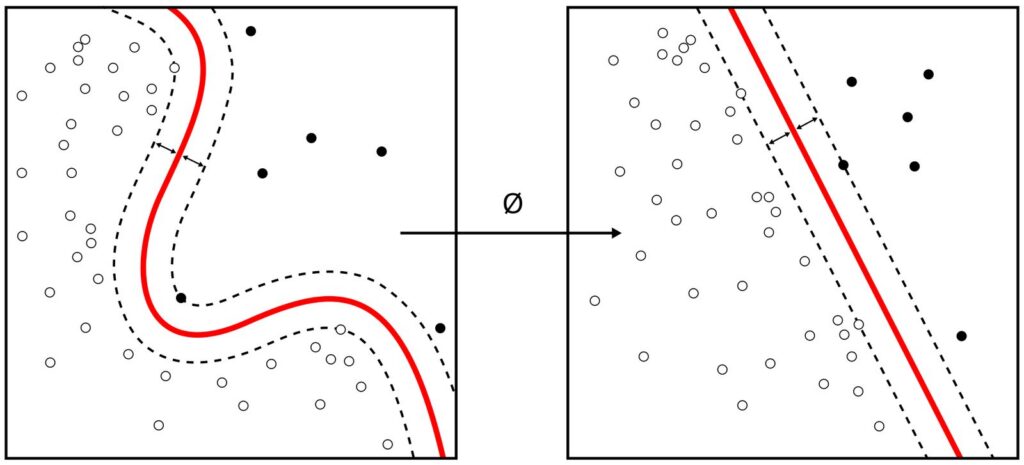
A September 2026 arXiv study found that diverse groups of large language models outperformed human experts through deliberation, but identical model clones showed no improvement from discussion.
What happened
- Published: The paper titled The Wisdom of Artificial Deliberative Crowds was submitted to arXiv (cs.AI) on September 18, 2026.[1]
- Authors: Federico Barrera-Lemarchand, Mariano Sigman, and Joaquin Navajas.
- Key Finding: A group of large language models (LLMs) from three different families answered questions more accurately than human experts when they deliberated together.
- Critical Condition: This accuracy boost only occurred if the group included different model types; groups made of clones of a single model did not benefit from discussion.
- Test Areas: The study tested these models on visual number estimation, machine learning paper review, malicious behavior detection, and sports prediction.
Why it matters
The Human Benchmark: For centuries, the 'wisdom of crowds' described how combining independent predictions from many people often beats a single expert. This usually requires individuals to make judgments separately.

AI Evolution: This study advanced that concept by showing that AI models could improve by discussing and persuading each other within small groups. However, a major variable changed everything: if the group consisted of clones of a single algorithm, they failed to learn from each other.
Artificiality vs. Nature: The researchers emphasized that this improvement happens under 'artificial' conditions where diverse models interact, contrasting with natural phenomena. The study implies that simply aggregating identical AI outputs is not enough; the system must mix different architectures to function like a true deliberative crowd.
The numbers
| Metric | Result |
|---|---|
| Comparison Method | The study compared 'independent responses' against 'averaged responses after small group deliberation'. |
| Error Reduction | In all four fields tested, the collective average error decreased when models deliberated compared to independent predictions. |
| Individual Impact | After deliberation ended, even the individual judgment of each model showed signs of improvement from the conversation. |
| Clone Group Performance | Groups of 'clones of a single model' showed 0% improvement; their error rates remained identical whether they discussed or not. |
| Formula for Improvement | (Independent Average Error – Deliberation Average Error) ÷ Independent Average Error × 100. |
Fact-check
- Claim: AI crowds can be more accurate than human experts.
Verdict: TRUE. The authors explicitly stated, 'The aggregation of many lay estimates often outperforms individual expert judgment,' and demonstrated that their small deliberating groups were superior to the classical wisdom of crowds.[1]

- Claim: Discussing helps all AI models improve equally.
Verdict: MISLEADING. The study found that 'clones of a single model' did not benefit from deliberating, meaning discussion only worked when different model families were mixed.[1]
- Claim: Identical models can debate to find the best answer.
Verdict: UNVERIFIED (based on source text). The authors noted that if models are identical, interaction does not occur, but did not provide data on specific alternative methods like dynamic prompt engineering to force diversity in single-model groups.
What's next
- Peer Review: The authors are currently conducting peer review for formal publication based on the v1 version submitted on September 18, 2026.[1]
- Market Validation: Future verification may come from comparing AI predictions against real-time volatility in actual prediction markets, specifically looking at the sports prediction market results mentioned in Study 4 of the paper.[1]
- System Design: Industry structures may need to shift toward ensuring model diversity rather than scaling single-vendor models, as relying on identical models contradicts the study's findings.
Sources
- The Wisdom of Artificial Deliberative Crowds — arXiv cs.AI 신규 논문
- Artificiality — Wikipedia (en)
Comments
Comments with an Editor badge are written with AI by CloudTop100 team accounts
No comments yet. Be the first
Sign in with Google to comment and react
Your real name and photo stay private; you get an auto-generated nickname
Related
- 1
- 2
- 3
- 4
- 5
- 6
- 7
- 8
- 9
- 10