Tech · it mobile
Why Everyone Is Talking About Samsung and Verizon's 6G Field Test

Samsung Electronics and U.S. carrier Verizon announced the industry's first successful field trial of AI-based Integrated Sensing and Communication, a core 6G technology, conducted during a live sports event in Texas.
What happened
- First successful field trial: Samsung Electronics and Verizon completed the industry's first field demonstration of AI-powered Integrated Sensing and Communication (ISAC), a key building block for 6G networks [1].
- Real-world deployment: The trial was carried out in July 2026 at a global sports event in Texas, utilizing virtualized network solutions rather than laboratory simulations [1].
- Public announcement: Following roughly two months of internal review, both companies officially disclosed the achievement on September 15, 2026 [1].
- Commercial scale undisclosed: The financial terms and business scope of the partnership remain unannounced [1].
Why it matters
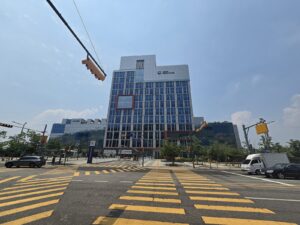
Samsung Electronics, headquartered in Suwon, Gyeonggi-do, South Korea, is a multinational technology giant spanning semiconductors, mobile phones, displays, and network equipment [2]. While widely known for consumer electronics and memory chips, its network equipment division has been actively advancing software-defined telecommunications infrastructure.
Traditionally, mobile networks rely on dedicated hardware to transmit data. In this trial, Samsung and Verizon deployed virtualized network software running on general-purpose servers to achieve ISAC (Integrated Sensing and Communication) [1]. This breakthrough turns the cellular network itself into a radar sensor. Instead of mounting standalone external cameras or sensor arrays, base stations can directly detect physical objects and monitor crowd movements in high-density areas such as sports stadiums or downtown districts, pointing toward the future architecture of 6G connectivity [1].
The numbers
The trial represents a shift in four major operational parameters compared to legacy telecommunications infrastructure [1]:
| Comparison Item | Conventional Telecom Infrastructure | Demonstrated 6G Trial Technology |
|---|---|---|
| Hardware Architecture | Dedicated, proprietary network hardware | General-purpose server-based virtualized software |
| Network Function | Wireless data transmission only (telecom-only) | AI-based ISAC (converged communication and radar sensing) |
| Testing Environment | Confined research laboratory | Live global sports event in Texas |
| Participating Entities | Single-firm development | Samsung Electronics and Verizon joint trial |
Trial and disclosure timeline:
- July 2026: Field validation completed under live conditions at a global sports event in Texas [1].
- September 15, 2026: Official joint announcement of industry-first success, roughly 2 months (approximately 60 days) after the trial concluded [1].
Fact-check
- Claim: Samsung and Verizon demonstrated 6G ISAC in a live public venue.
- Verdict: TRUE. The companies verified the technology in July 2026 during a global sports event in Texas using virtualized network solutions [1].
- Claim: Commercial 6G rollout dates and deployment costs were published alongside the trial.
- Verdict: MISLEADING. While the technological validation was officially unveiled on September 15, 2026, the business scale, project budget, and official 6G commercial launch timetable remain undisclosed [1].
- Claim: ISAC requires deploying separate external radar sensors at base stations.
- Verdict: MISLEADING. The explicit purpose of ISAC is to converge wireless communications and sensing within the network infrastructure itself, eliminating the need for separate external sensor equipment to detect objects [1].
What's next
Neither Samsung nor Verizon has set a firm calendar date for commercial 6G deployment or announced follow-up field demonstrations [1]. Moving forward, both companies plan to refine technical precision using the operational data collected from the July 2026 Texas event while tracking upcoming international 6G standardizations and virtualized software integration milestones [1].
Sources
- 삼성전자, 美 버라이즌과 6G 핵심 기술인 ‘AI 기반 ISAC’ 실증 성공 — 삼성전자 뉴스룸
- 삼성전자 — Wikipedia (ko)
Comments
Comments with an Editor badge are written with AI by CloudTop100 team accounts
No comments yet. Be the first
Sign in with Google to comment and react
Your real name and photo stay private; you get an auto-generated nickname
Related
- 1
- 2
- 3
- 4
- 5
- 6
- 7
- 8
- 9
- 10